


As part of a portrait by Switzerland’s largest media group Tamedia, Mathis Wackernagel discussed in May 2026 how overshoot may affect countries and companies. Mathis makes the case why the narrative of holding ecological overshoot primarily as a resource security and economic resilience issue, rather than as an environmental or moral issue, makes the story more transformative. The Interview was produced by Sebastian Sele.
Mathis Wackernagel on Effective Engagement Strategies
Switzerland often claims that it is too small to make a meaningful difference in environmental policy. A lazy excuse? “Yes,” says Mathis Wackernagel. “Everyone considers themselves a special case.”
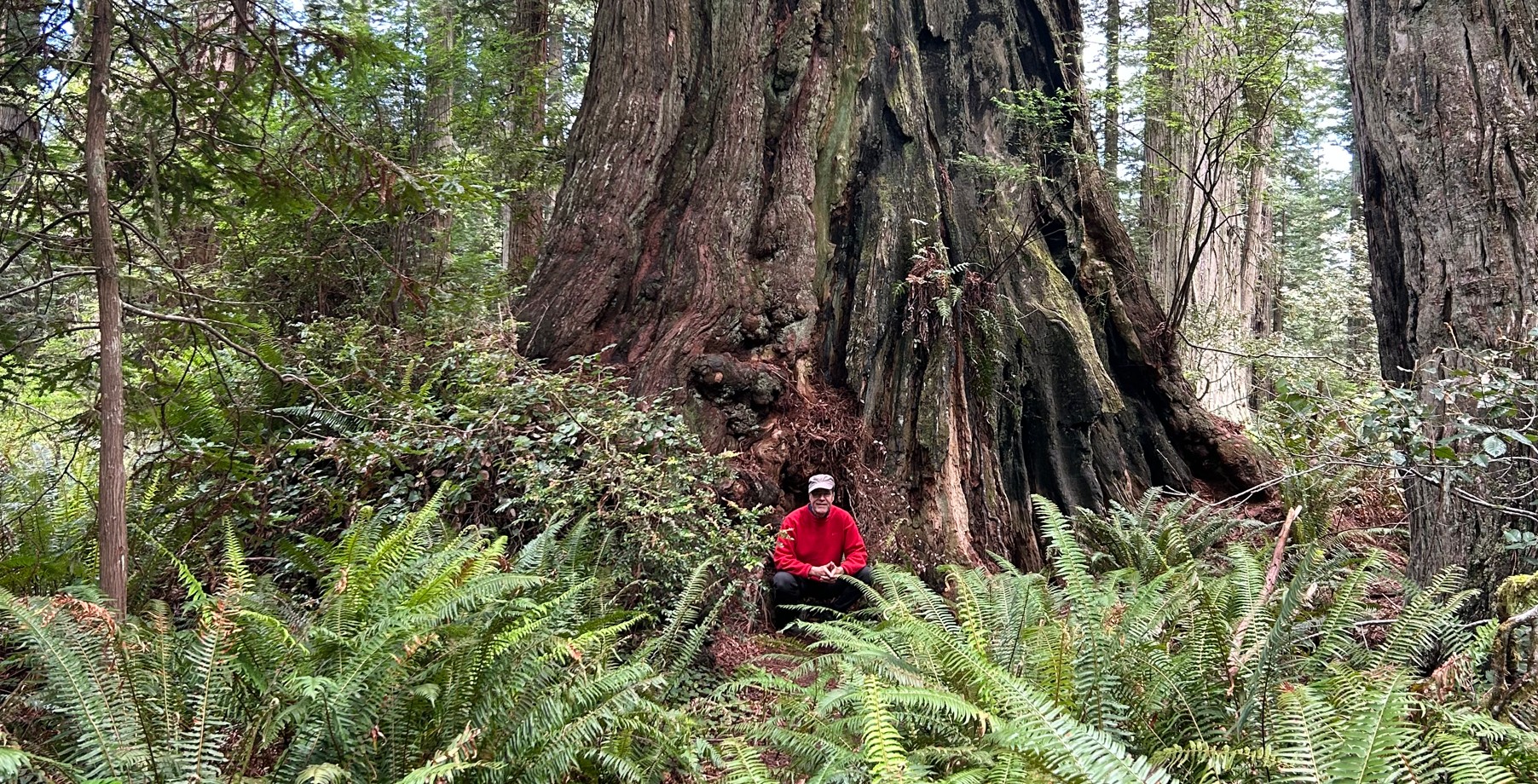
EBASTIAN SELE – How does one become one of the defining scientists of our time?
MATHIS WACKERNAGEL – (Laughs.) I simply followed my interests and had people around me who told me: do whatever you want.
You have focused on resources since the beginning of your career. Where did that interest come from?
My grandparents talked a lot about how life was for them during Second World War. At that time, Switzerland could only produce enough food for about seven months of the year. There simply wasn’t enough for everyone, which led to food rationing.
Those stories made it clear to me at an early age how central resource security is. By that I mainly mean renewable resources. They are the mother of all resources, because they ultimately limit everything else.
The issue has certainly not lost its relevance.
No. Countries who do not place resource security at the center of their economic policy are on a suicidal path. I don’t mean that metaphorically. I mean it literally.
Isn’t that overstating the case?
I wish it was. It is like people who refuse to charge their mobile phone. The resource risk is also underestimated because resource overuse is characterized by a massive market failure that keeps resources look incredibly cheap and enormously available. It also means that the market is not correcting the problem.
If there are too few bakeries, bread becomes more expensive and new bakeries appear. With resources, the invisible hand doesn’t work. We are deeply in global overshoot. We depend on resource flows that do not exist in the long term and that we ultimately cannot afford. It is inefficient and risky. And someone will end up paying the price.
Some would respond that Switzerland is hardly affected. It is wealthy enough to buy the resources of other countries.
Of course, in a stable system, money rules the world.
But if international trust breaks down, local resources gain value relative to internationally mobile money. The balance of power shifts.
Already today, 72 percent of the world’s population lives in a country that consumes more than its ecosystem produces while simultaneously having lower-than-average income and therefore lacking the purchasing power to buy additional resources.
Switzerland is small, and education is considered its greatest resource. Many see it as a special case.
Here’s my cultural theory, which may make anthropologists shake their head: “Exceptionalism is universal.” But this is what I have experienced around the world:
Everyone thinks they are a special case.
For example, In Switzerland, people constantly say we’re too small. We should wait for others to take the big steps first. Or we are too rich, and hence this will not affect us.
But the incentive to act is actually greater when others are doing nothing. If no one else prepares, the unprepared are exposed to even greater risks even faster.
So you see the “special case” argument as a lazy excuse?
Yes.
People like pointing fingers at others. It may feel satisfying to do, but it is hardly an effective transformative strategy. I am not advising to look away and not see the horrendous injustices and the enormous destruction of current practices. This is what motivates to act. But motivation is not strategy. Just to point fingers because I am angry does not invite people to the table. Therefore, my message is different: everyone has a great deal of power to influence their own future. Maybe, this message is a bit boring, but it contains agency.
Which countries are actually interested in resources?
The only country that truly takes resources seriously is China.
If you check the binding indicators of China’s Five-Year Plan, nearly all of them are environmental or resource related.
That may be because China developed its own intellectual tradition separately from the West. Until 1971, the People’s Republic of China was not even admitted to the United Nations.
How do you get other countries to focus on this issue?
That’s what I keep inquiring.
Since the 1970s, we have known with clarity that human demand greatly exceeds available renewable resources. Yet very few people see an advantage in responding to that reality directly. Reducing resource use is perceived as an unattractive burden to take on.
Therefore, resource overuse, including climate change, which I consider to be at the core, is treated as a noble side topic.
I am fascinated and driven by the question: What is missing that prevents us from recognizing the economic necessity of acting?
Your own answers, such as the ecological footprint, are known around the world.
The ecological footprint and Overshoot Day have certainly gained attention.
But they are often perceived as thorns in people’s sides rather than gifts to support decision-makers prepare their cities, countries, or companies more effectively for an unavoidable future.
Critics say that public outreach can trivialize scientific work.
Should dentists refrain from speaking publicly about dental hygiene?
It is entirely appropriate for scientists to engage with the public.
However, what I often find counterproductive is the way this communication is done.
What do you mean?
We are in a competition among ideas.
For an idea to succeed, it must be empirically demonstrable and relevant.
And something that is often forgotten and even more important: the recipient must perceive the information as beneficial to them.
People need to feel that they are better off having the information, not that they have been handed a burden or a thorn.
Otherwise, most just rebel against it.
Al Gore’s excellent film was called An Inconvenient Truth. But the title I find unfortunate. It should have been called: Inconvenient ignorance. If we do not know about our context, including risks and opportunities, we remain unprepared.
Shouldn’t communication today emphasize greater urgency? We are on track to fail in the fight against climate change.
Most psychologists know that doom-and-gloom communication is psychologically ineffective.
Human beings are animals. Evolutionarily speaking, our brains are designed to seek advantages and avoid disadvantages.
Apocalyptic messaging puts our brains into a defensive posture and paralyzes us.
That doesn’t mean we should sugarcoat reality.
Useful information must be empirically grounded.
But receiving that information must also be perceived as an advantage. It has to offer agency. Otherwise most people will reject it.
How do you reach people?
A physician once told me: People are more afraid of an empty refrigerator than an overflowing garbage can. The garbage can you can kick down the road. The empty fridge keeps you hungry.
But we tell the environmental story from the perspective of the garbage can, not from the perspective of resource security. Even climate. Yes, our carbon waste is a garbage problem. But the consequences of climate disruption is resource insecurity.
The garbage-can story is also a burden.
Resource security is an advantage.
You also advise governments on these issues. What have you learned about how they approach them?
In the early years we mainly worked with high-income countries because they had the budgets.
That was a mistake.
Their environmental ministries were unable to convincingly present responses to overshoot as an advantage for their countries.
Ironically, although resource-deficit countries face greater risks, countries such as Uruguay and Ecuador are often more receptive to these ideas.
What is special about Uruguay?
Uruguay has roughly three times more biocapacity than it consumes.
So I tell them: You are the wealthy ones.
China needs about three times more resources than it possesses.
Uruguay, with its biocapacity reserve, has strong cards in its hands. It may still lack some self-confidence, but the resource trends are clearly moving in its favor.