

Living Planet Report
Every two years, WWF publishes the Living Planet Report, a science-based analysis on the health of our planet and the impact of human activity. Since its inception, Global Footprint Network has contributed the Ecological Footprint assessment as a measure of human demand.
The Living Planet Report uses the Ecological Footprint and additional complementary measures to explore the changing state of global biodiversity and human consumption. The Living Planet Report 2024, released October 10, 2024, shows a 73% decrease in the average size of monitored vertebrate wildlife populations between 1970 and 2020, based on the LPI metric that is now maintained by the Zoological Society of London.
The report indicates that many of the main drivers of wildlife population decline are directly linked to human activities, including habitat loss, degradation, and exploitation. According to Global Footprint Network, humanity is currently using the resources of 1.78 planets to provide the goods and services we demand when we only have one Earth.
Ecological Footprint and biocapacity results were first included in the Living Planet Report 2000. At the time, it reported that humanity’s Ecological Footprint exceeded the planet’s biocapacity by about 30% in 1997. The current National Footprint and Biocapacity Accounts (2025 edition), which have been improved over the years, mostly with more robust data sources, still show that global overshoot was 32% for 1997, as opposed to 78% for 2024.
History
The first Living Planet Report was issued in 1998, conceived by Jorgen Randers, then Deputy Director General of WWF International, and Jonathan Loh, the WWF Policy Officer in charge of metrics, to be WWF’s flagship report carrying the organization’s message into the world. These two authors also developed the Living Planet Index.
For the 2000 report, Jorgen, Jonathan and their colleagues invited Mathis Wackernagel to help them complement the Living Planet Index with the Ecological Footprint, serving as the metric for human pressure. Claude Martin, the then Secretary General of WWF International, used to summarize WWF’s mission as: “Our conservation program’s goal is to get the LPI up, while our policy program’s goal is to get the Footprint down.”
The next four Living Planet Reports (2002, 2004, 2006, and 2008) were produced between Global Footprint Network and WWF and became WWF’s flagship report. One key achievement of the Living Planet Report was that living within planetary means became one of the two meta goals of the WWF family starting in the early 2000s. As a result of its success, WWF embraced the initiative fully, making it an internal product driven by their own internal voices.
In the years after the 2008 report, the Ecological Footprint has continued to be featured in the Living Planet Reports, with less prominence in the more recent LPRs.
Living Planet Report Partners
WWF
WWF is an independent conservation organisation, with more than 35 million followers and a global network active through local leadership in over 100 countries. WWF’s mission is to stop the degradation of the planet’s natural environment and to build a future in which people live in harmony with nature, by conserving the world’s biological diversity, ensuring that the use of renewable natural resources is sustainable, and promoting the reduction of pollution and wasteful consumption
Zoological Society of London
ZSL is a global science-led conservation organisation helping people and wildlife live better together to restore the wonder and diversity of life everywhere. It is a powerful movement of conservationists for the living world, working together to save animals on the brink of extinction and those which could be next. They are now the hosts of the Living Planet Index.
Living Planet Report 2024
English – host page (download is 43 MB)
Living Planet Report 2022
English – Full report (10 MB)
Living Planet Reports 2020
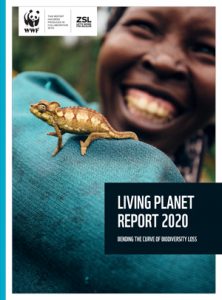
English – Full report (22 MB) | English – Summary
French – Summary | Spanish – Summary |
Chinese – Summary | Russian – Summary
Living Planet Reports 2018
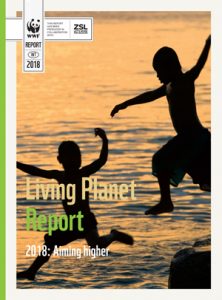
English – Full Report (15 MB) | French – Summary | German – Summary
Living Planet Reports 2016
English – Full Report (22 MB) | English – Summary (6 MB)
Landing page
Living Planet Reports 2014
Full Living Planet Report (25 MB)
The Ecological Footprint for Sustainable Living in Japan
Ecological Footprint of the Subjects of the Russian Federation 2014
Full Report Russian (56 MB) | Full Report English (12 MB)
Ecological Footprint and Sustainable Consumption in China 2014
English (2 MB) | Chinese (2 MB)
Living Planet Report 2012
Africa Ecological Footprint Report
Asia Pacific Ecological Footprint
China Ecological Footprint Report 2012
English (13 MB) | Chinese (13 MB)
Living Planet Report 2010
English (25.3 MB)| French (24 MB) | German (24 MB) | Download all graphs & maps from the report (20 MB) | Living Planet Report background for media (0.5 MB) | 2010 Living Planet Report press release (0.1 MB)
Living Planet Report 2008
English (4.6 MB)
de | es | zh | nl | it | ru | fr | fr supplément | 日本語
Canadian Living Planet Report 2007
Europe 2007: Gross Domestic Product and Ecological Footprint
Living Planet Report 2006
Asia-Pacific 2005: The Ecological Footprint and Natural Wealth